
Rheumatoid Arthritis (RA) Treatment
 Rheumatoid Arthritis (RA) of the shoulder is a type of autoimmune disease which causes your body to start attacking healthy cells. This type of arthritis focuses specifically on cells in the joints as if they were an intruder or disease. This causes the cartilage or tissues in the shoulder to get destroyed, which results in rubbing bones.
RA causes immense pain and swelling in the shoulder area that only worsens over time. There is no known cure for RA as of now. However, there are several treatment options that can help you stay active by managing pain.
Thomas & Bigler Knee and Shoulder Institute, led by board certified orthopedic surgeons Dr. Steven C. Thomas and Dr. Gregory T. Bigler, provides orthopedic surgery to patients in Las Vegas, Nevada, while also serving areas such as greater Pahrump, Bullhead City, Lake Havasu, and Mesquite, NV.
Understanding Rheumatoid Arthritis of the Shoulder
RA causes the joint lining to start swelling when it affects the shoulder. This results in stiffness and pain. The shoulder has two joints, which can both get affected by arthritis. The first joint is the acromioclavicular (AC) joint, in which the collarbone meets the shoulder blade tip. The other is called the glenohumeral joint, where the upper arm bone head fits perfectly into the shoulder blade.
Your physician will first identify the affected joint to help you with the most appropriate and effective treatment. They will also identify the type of arthritis you have. There is no known cause for RA. Environmental factors and genetics are said to play a major role in this disease. While there is no cure for Rheumatoid Arthritis of the shoulder, there are several treatment options that can help you with your pain.
Nonsurgical Options for Pain Management
Your physician will initially employ nonsurgical methods to treat RA of the shoulder. These are a few common options:
- Rest
- NSAIDs (nonsteroidal anti-inflammatory medications)
- Physical therapy
- Moist heat
- Corticosteroid injections for reducing pain and swelling
- Icing the shoulder
- Methotrexate and other disease modifying drugs
- Disease-modifying antirheumatic drugs (DMARDs) and other biological treatments, like Orencia, Remicade, Enbrel, Humira, Rituxan, Actemra, Cimzia, Kineret, and Simponi.
- Dietary supplements to relive pain, such as chondroitin sulfate and glucosamine
Surgical Approach
Your physician may recommend getting a surgery if the above-mentioned nonsurgical methods don’t help in relieving pain and other symptoms. Surgical approach to treating RA of the shoulder involves the following:
- Tendon repair: Joint damage and inflammation can cause the tendons around the shoulder joint to rupture or loosen. The tendons would be repaired in this surgical procedure.
- Joint fusion: You may need to realign or stabilize a joint by surgically fusing it. This helps in relieving pain when joint replacement is no longer an option.
- Total joint replacement: Your surgeon, during a joint replacement surgery will remove the damaged parts of the joint and insert a plastic or metal prosthetic.
The surgical procedure chosen by your physician will depend on the severity and extent of your RA of the shoulder. Orthopedic surgeons Dr. Thomas and Dr. Bigler receive patients from Las Vegas, Nevada as well as greater Pahrump, Bullhead City, Lake Havasu, and Mesquite, NV for orthopedic surgery.
Contact Board Certified Surgeons Dr. Bigler or Dr. Thomas at the Knee and Shoulder Institute in Las Vegas, NV to Schedule an Appointment:
If you would like to schedule an appointment or learn more about the Knee and Shoulder Institute procedures & treatments performed by Las Vegas, Nevada board-certified surgeons Steven C. Thomas, MD and Gregory T. Bigler, MD. Contact the office today click here.
Serving patients from and around greater Las Vegas, Lake Havasu, Bullhead City, Mesquite, Pahrump, Nevada
 Reverse total shoulder replacement is an alternative treatment to usual shoulder replacement. The procedure was designed for people with large tears in their rotator cuff. Reverse total shoulder replacement works the same way as regular procedures. However, the joint in this is placed upside down. When the joint is attached in reverse, the arm is moved by different muscles. This is the primary reason for the alignment to work in a better way.
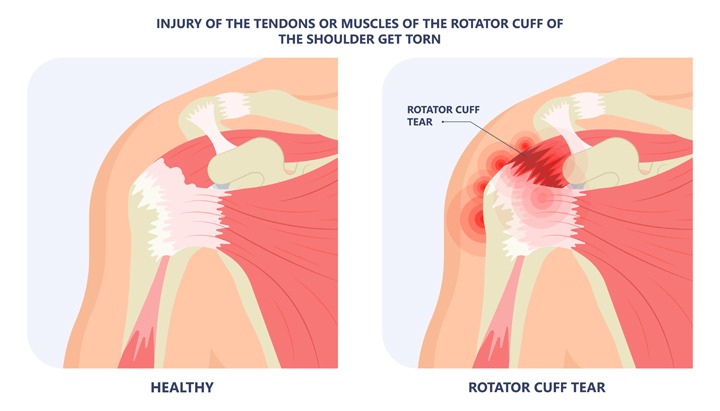 Fortunately, glenoid labrum tear can be treated in both surgical and nonsurgical way. Often times, surgical procedures are recommended if the symptoms fail to go away or if the tear is severe.
 Shoulder blade fractures are not very common injuries. They can result in inflammation and pain in the shoulder arc. Shoulder blade fractures can be caused by blunt and high energy trauma incidents. This can be in the form of car accidents or falls. This fracture type is generally treated in non-surgical ways. However, they may require surgery in some instances depending on its severity.
 You get a dislocated shoulder when the bone in the upper arm falls out of your shoulder socket. Shoulder dislocation can be of several different types. They are primarily identified on the basis of the direction in which the bone dislocates and the extent of the injury.
 Calcific tendinitis of the shoulder refers to a condition in which the shoulder tendons or the rotator cuff becomes inflamed. Calcium deposits may start to build up, causing bonelike structures. Calcific tendinitis of the shoulder usually occurs in the age group 40 to 60. It is caused because of shoulder overuse. However, there are surgical and non-surgical treatment options to help you resume normal motion and your daily routine.
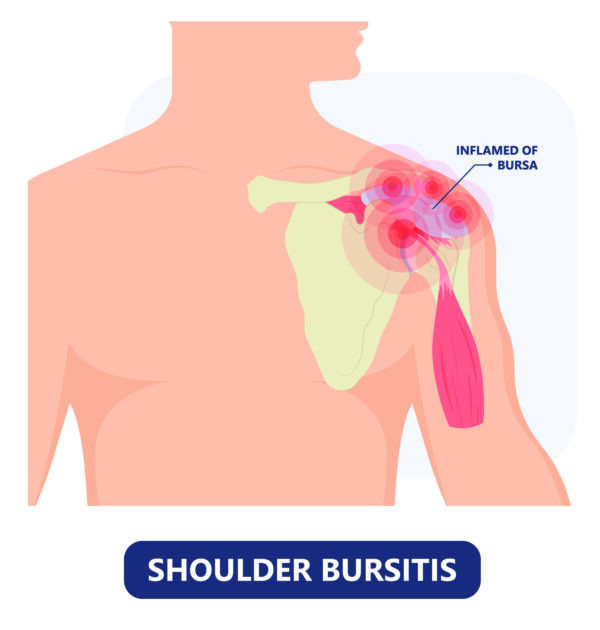 The shoulder joint has a fluid filled sac that becomes inflamed in bursitis of the shoulder. The inflammation causes pain and restricts normal motion. The condition doesn’t usually happen without any external trigger. Generally, bursitis of the shoulder is accompanied by rotator cuff tendonitis, which is the inflammation of the rotator cuff or shoulder tendons.
 Broken collarbone or a clavicle fracture is one of the most common fractures. It usually occurs after the individual suffers a serious accident or fall. Most collarbones heal with the help of a sling. However, surgical treatments may be required in certain rare and serious cases where the bone has moved too far out to heal without medical intervention.
 Bioinductive implant is a revolutionary new procedure for treating patients that have rotator cuff disease. Tendons can heal through the Rotation Medical Bioinductive Implant by introducing new tissue growth. This helps patients perform regular activities much quicker than traditional treatments. The procedure helps in reducing the risk of re-tears and degeneration as well.
 Biceps tendonitis is usually treated with a surgical procedure called biceps tenodesis. Biceps tendonitis is also known as biceps tendon tear. The surgery is usually recommended for people that suffer from shoulder pain because of biceps tendonitis. The pain is usually caused by inflammation and doesn’t improve with non-surgical treatment.